For physiotherapy clinics
The whole clinic, from booking to discharge.
Scheduling, records, packages and clinical notes in one place. You pay only for the physiotherapists who see patients — reception and management use it at no cost.
7 days free, no card, and nothing charged automatically at the end.
The everyday
A day you recognise.
The session spreadsheet somebody updates from memory at closing time — and nobody trusts at the end of the month.
Friday's notes written on Monday, every one of them stamped Monday.
The attendance certificate printed in a hurry, with the wrong letterhead or none at all.
What your clinic produces today:
None of this is carelessness. It is what happens when the schedule, the records and the paperwork live in three different places.
How it works
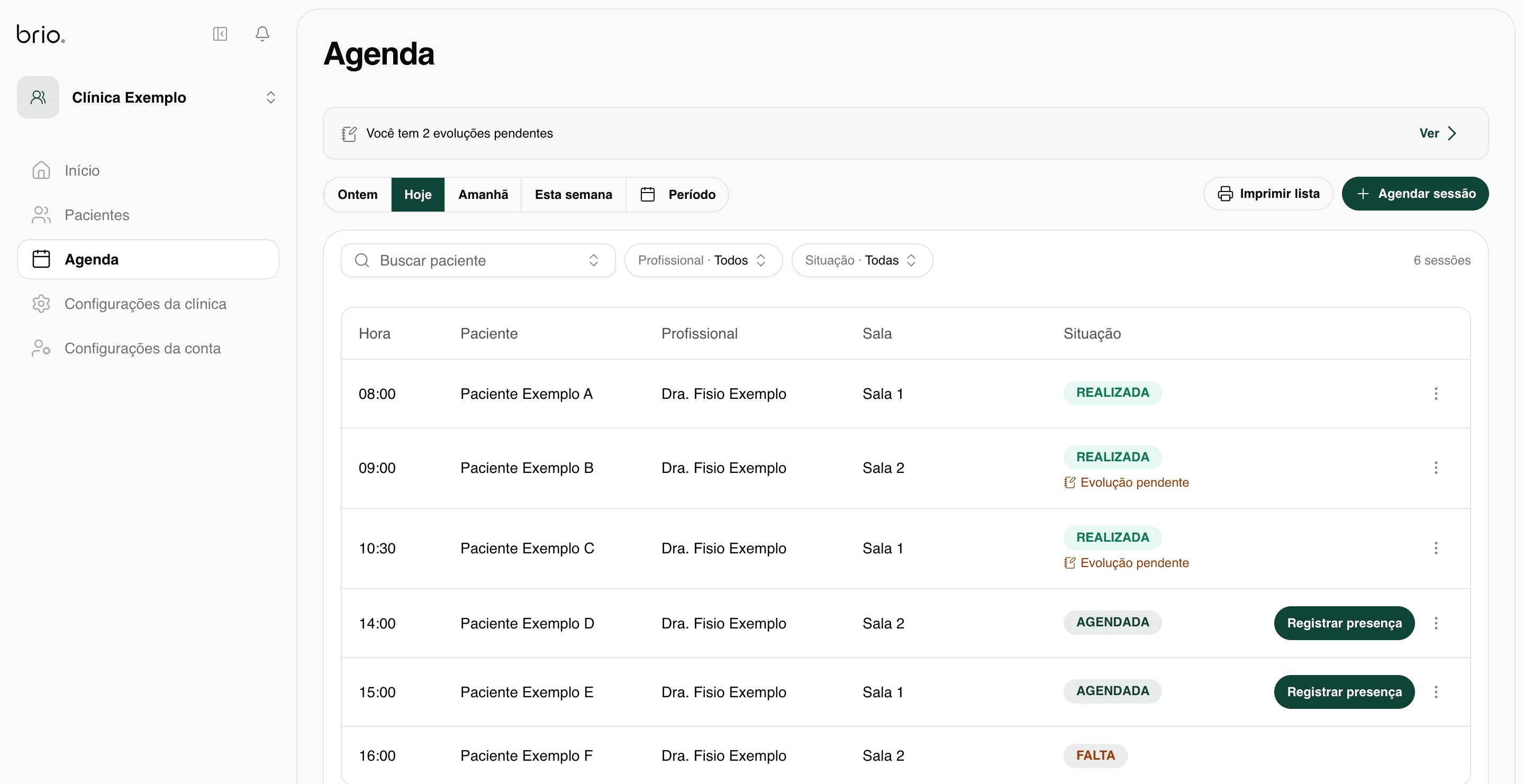
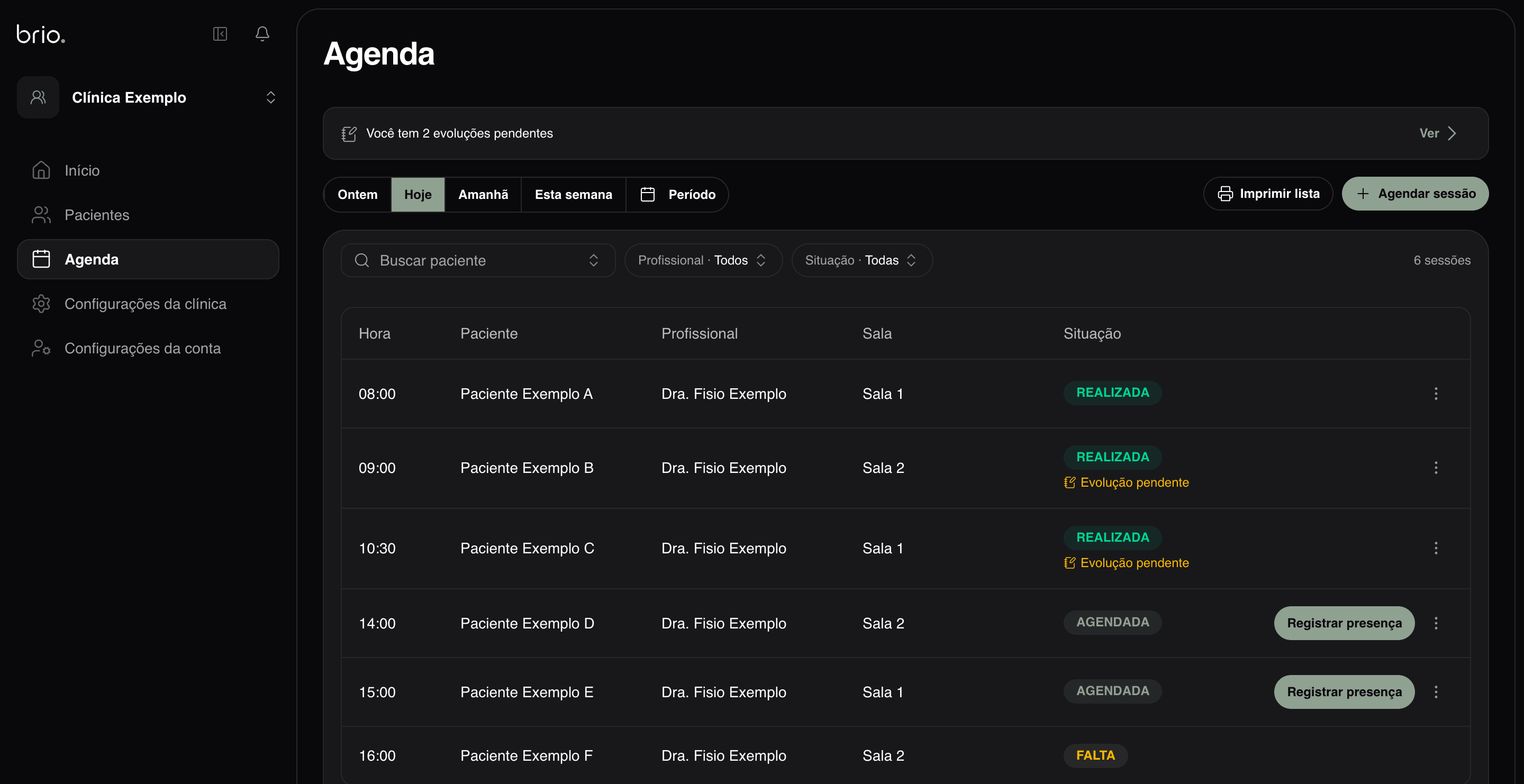
The whole path of one appointment, end to end.
Every step stays where the clinic already works — no spreadsheet on the side, no notebook at the front desk.
Booked.
Reception books the session and picks the patient's case. If that physiotherapist already has an overlapping slot, the system warns and lets you decide, because squeezing someone in is the clinician's call.
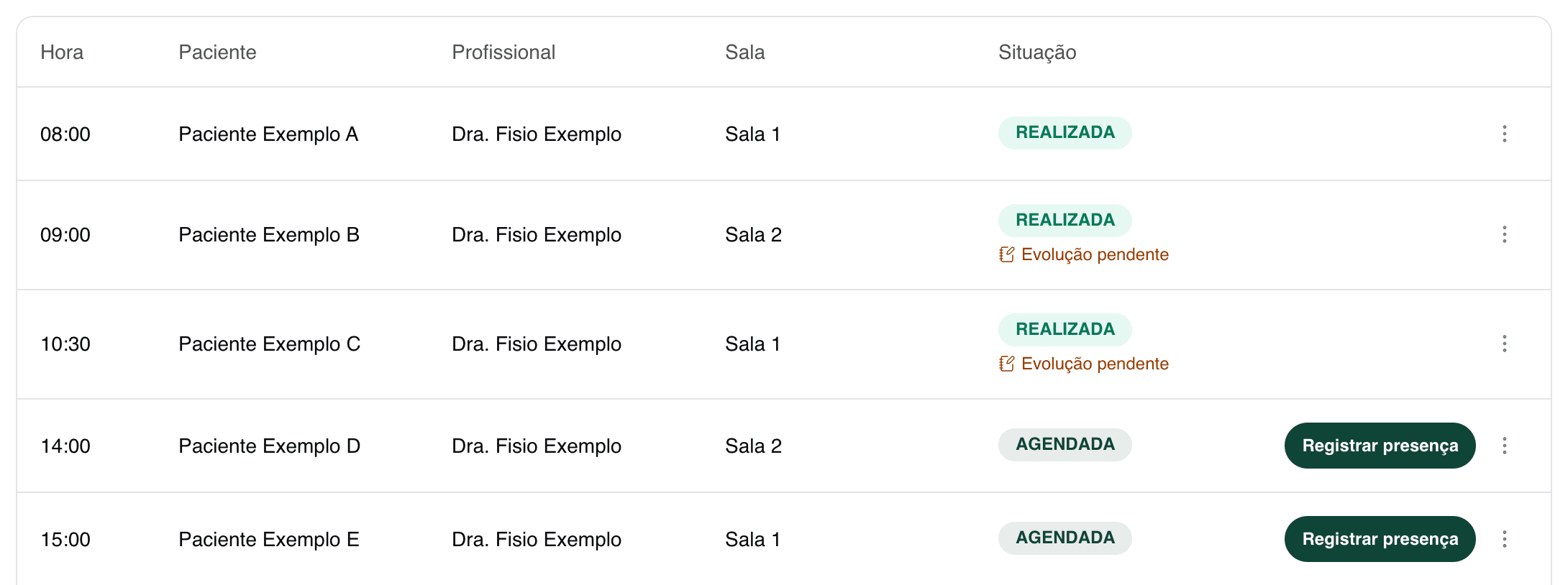
Arrived.
One tap records attendance. The patient signs on screen and the receipt stays attached to that session, for good.
Attendance recorded Patient · 2:00 pm
Signed on screen
Receipt attached to the session
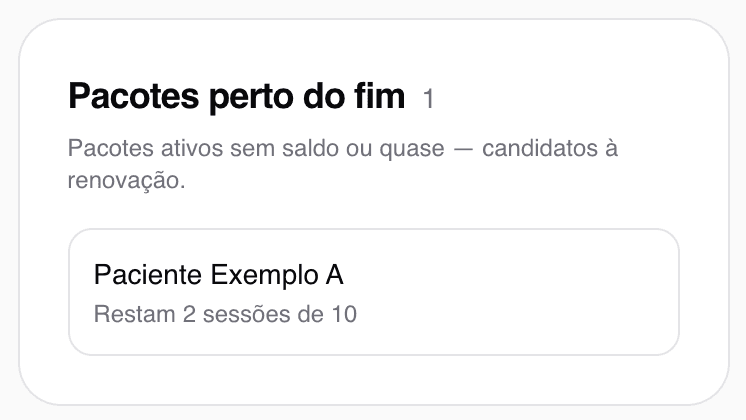
Deducted.
The package balance falls on its own. Nobody types “7 left”: the number comes from what was recorded on the day's schedule.
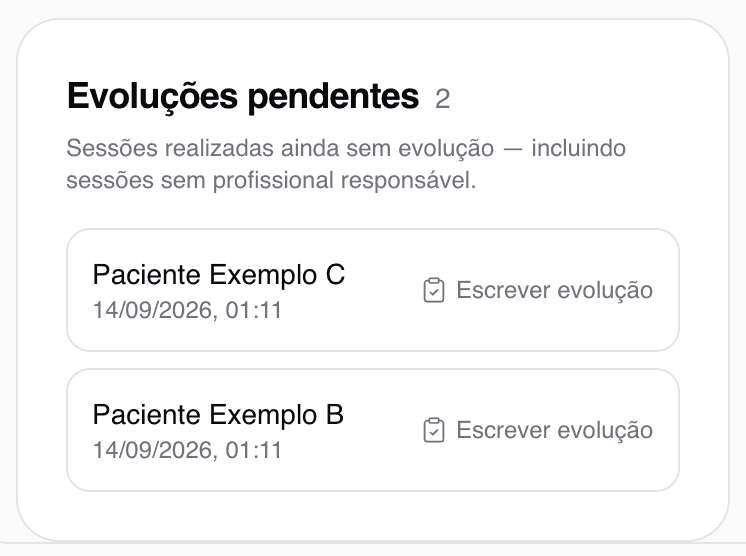
Written up.
The clinical note is written and signed by the physiotherapist. It is dated by the session, not by the day you sat down to write it.
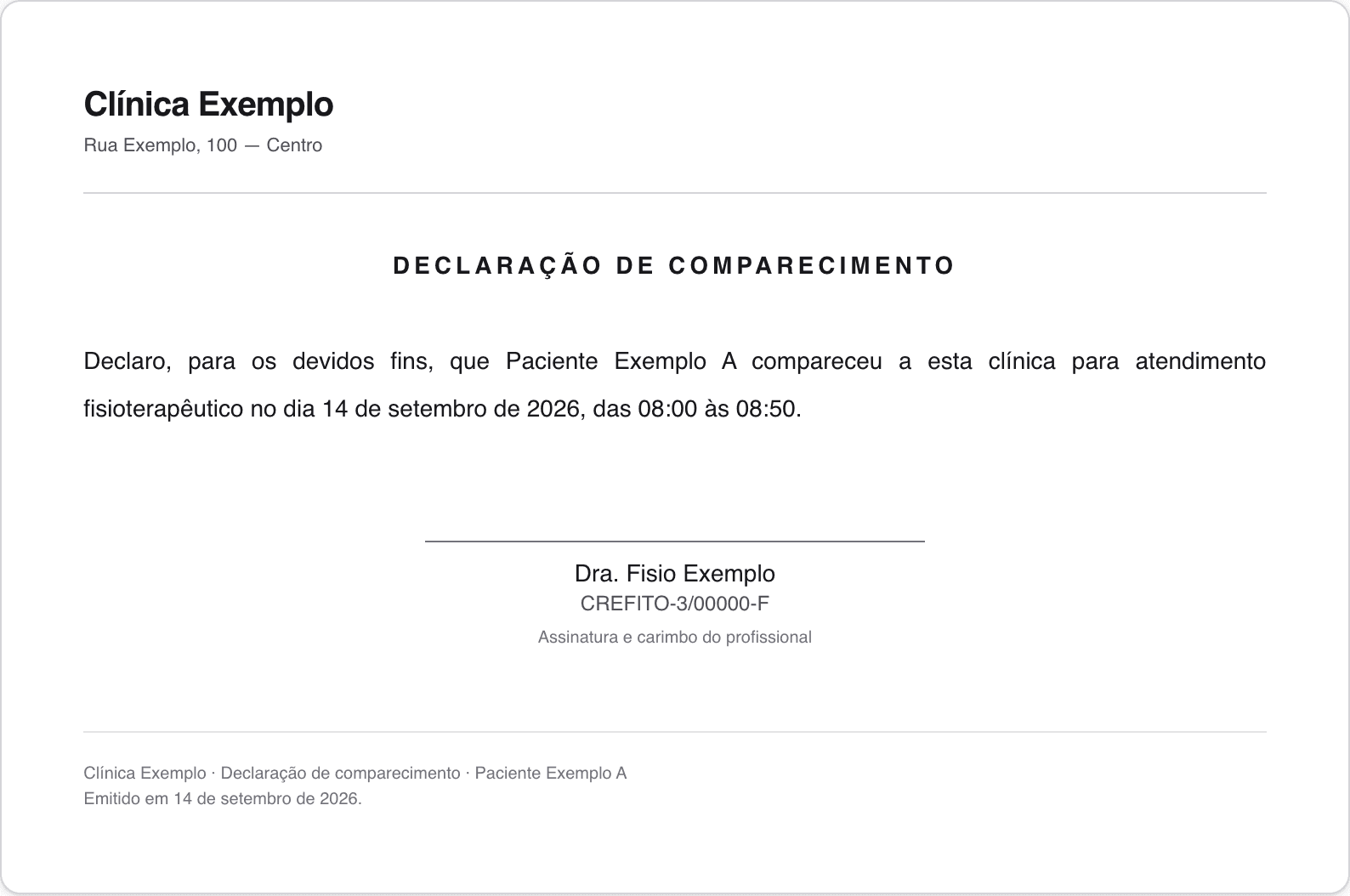
Documented.
Attendance certificates and evaluation reports come out with your clinic's name, logo and details — not ours.
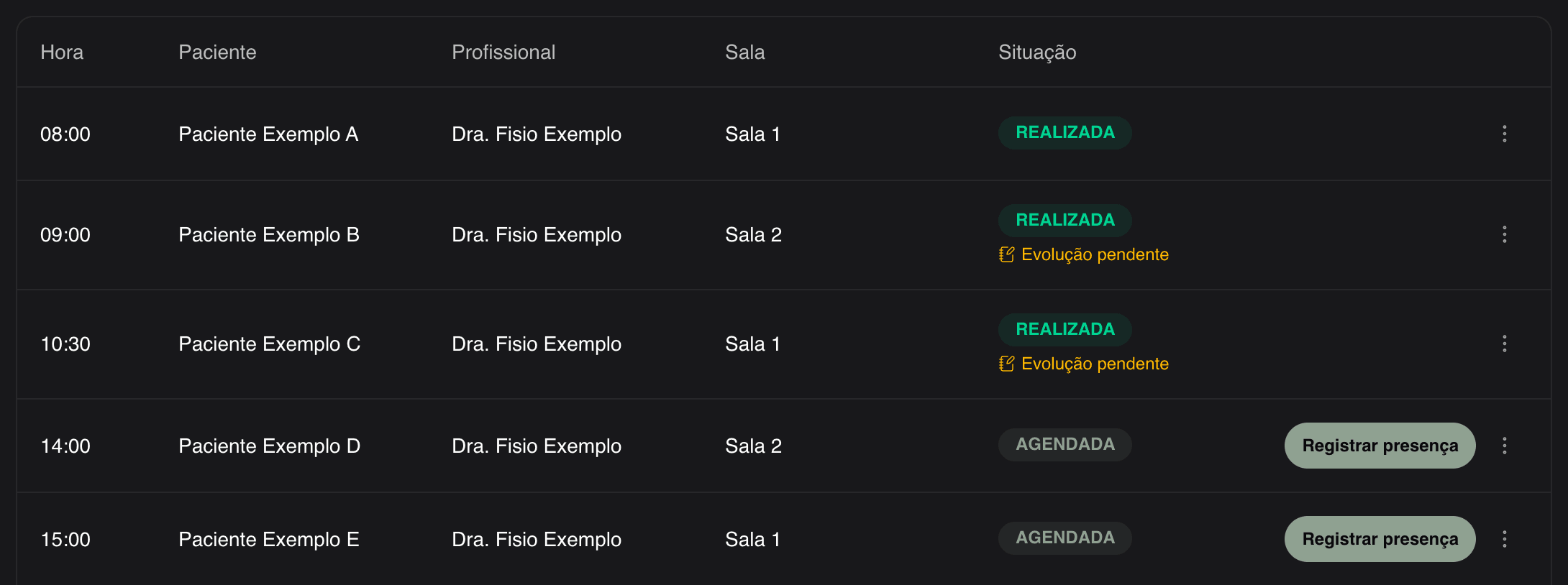
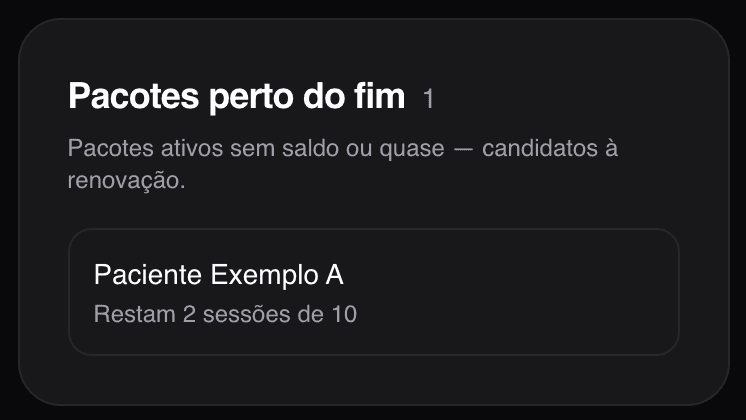
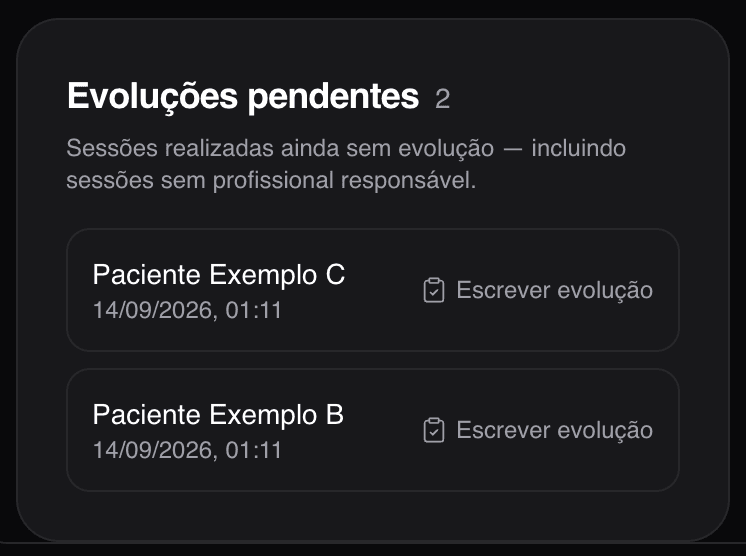
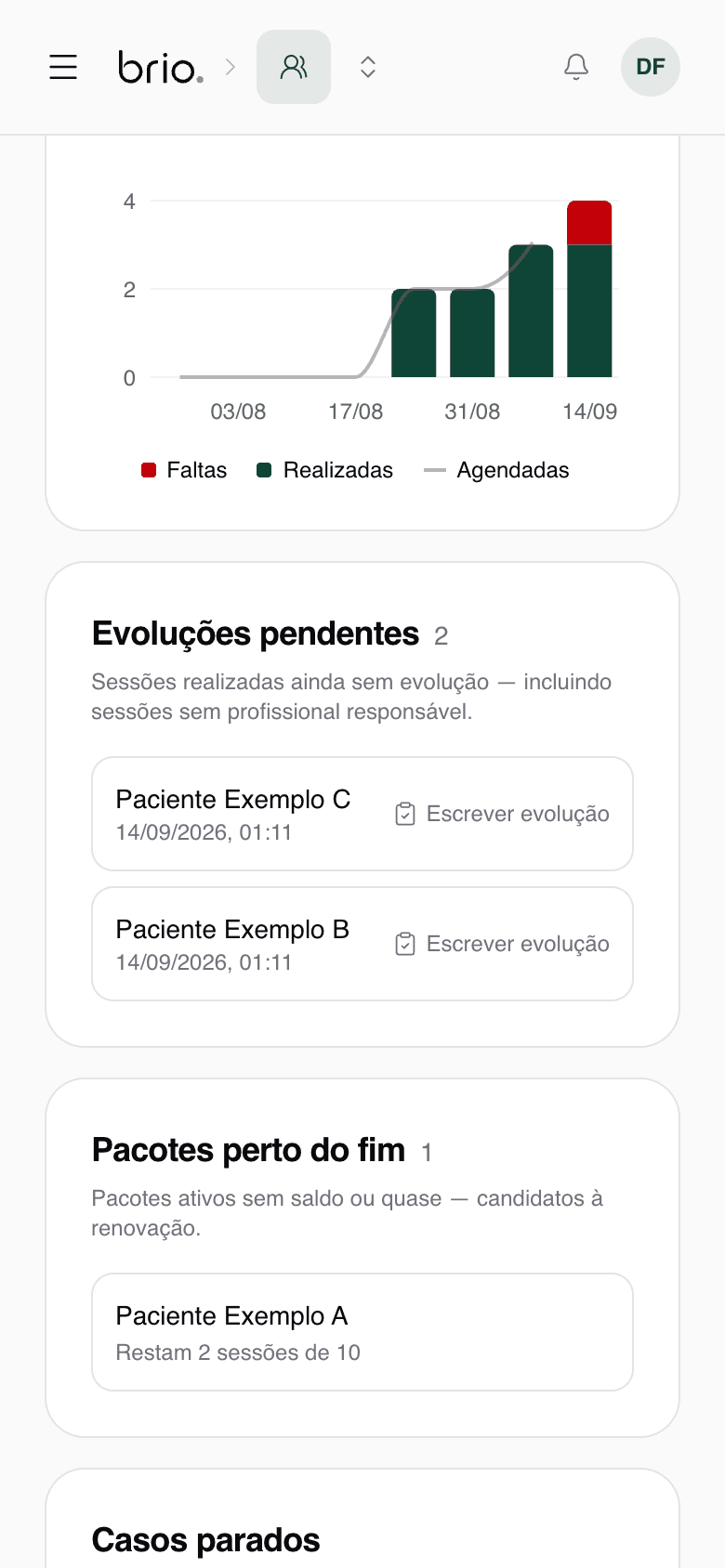
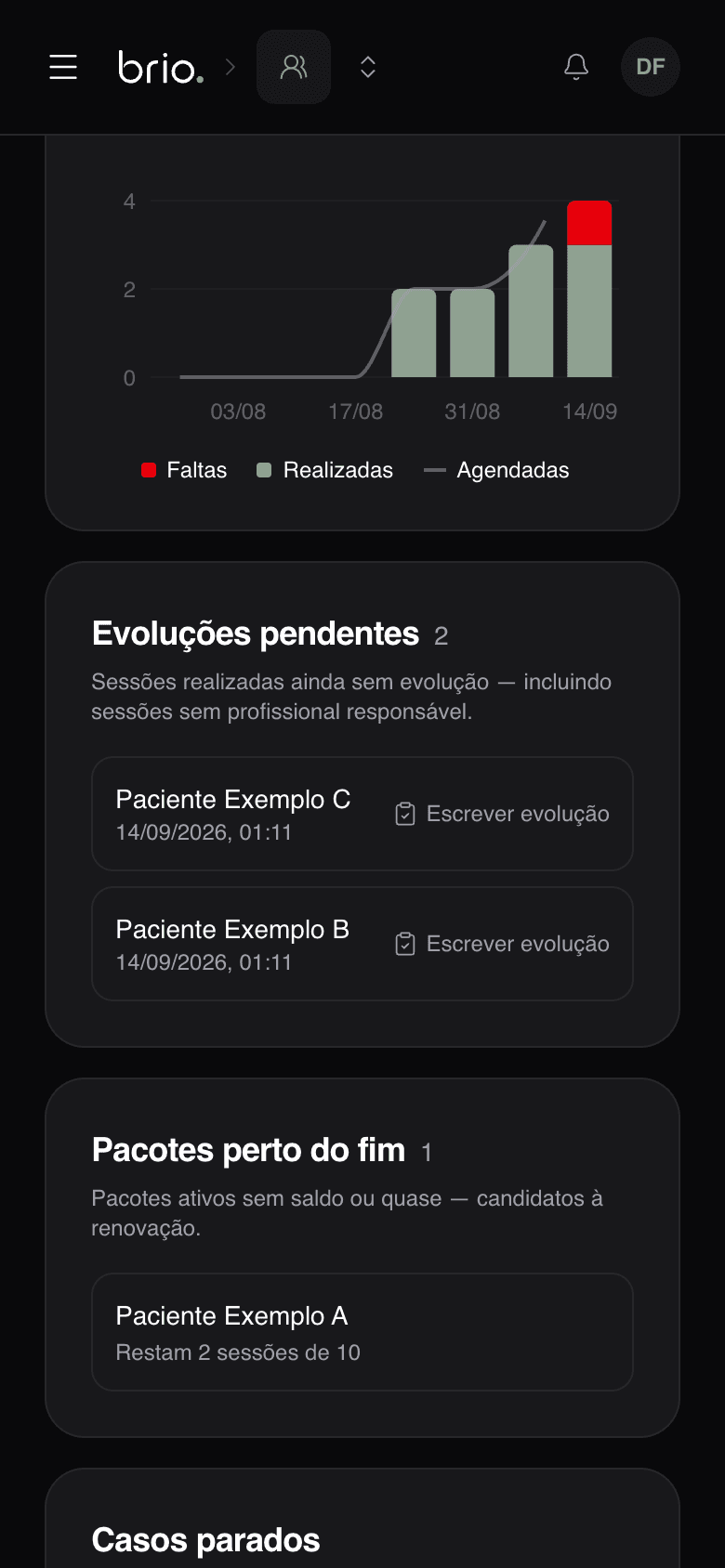
And whatever is still open shows up on the home screen: a note to write, a package running out, a case standing still.
Evaluation
Mark on the body what the patient feels.
Turn the figure, touch the spot and say what it is: pain, injury or surgery. Pain goes on a 0 to 10 scale. And you mark whatever you need: the whole knee, or just the medial collateral ligament.
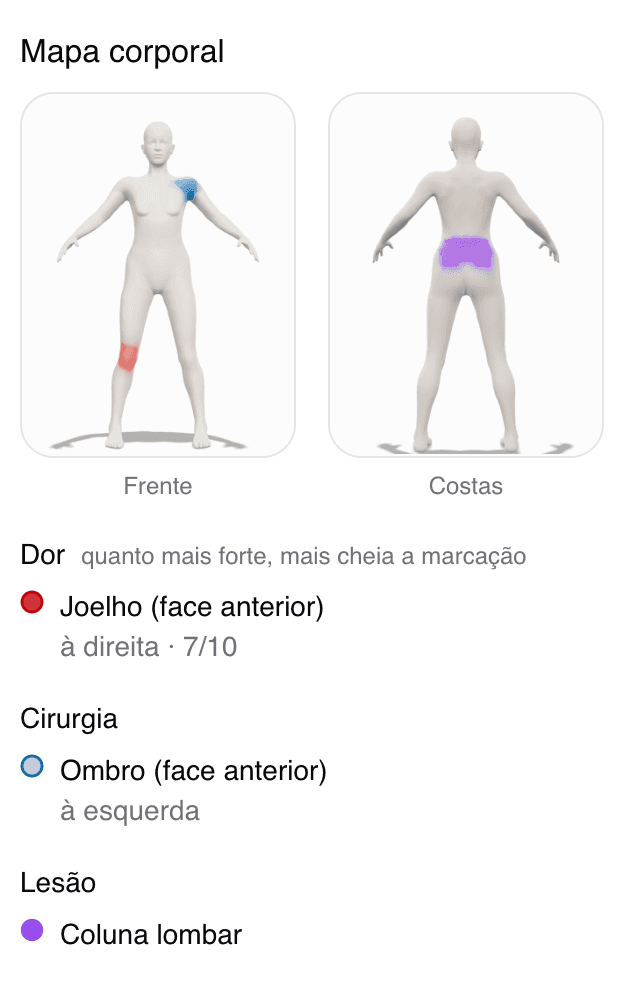
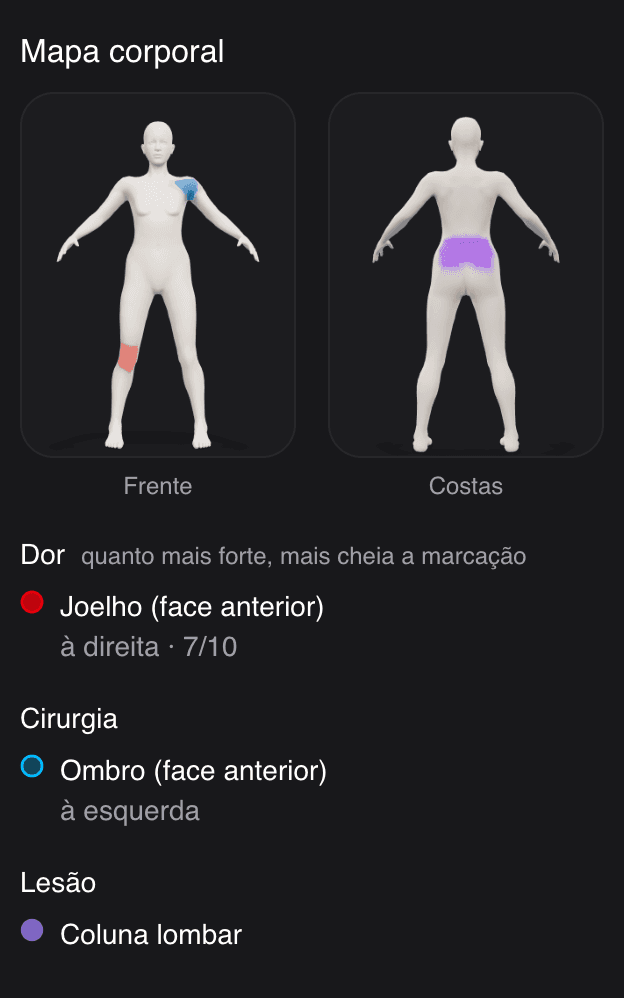
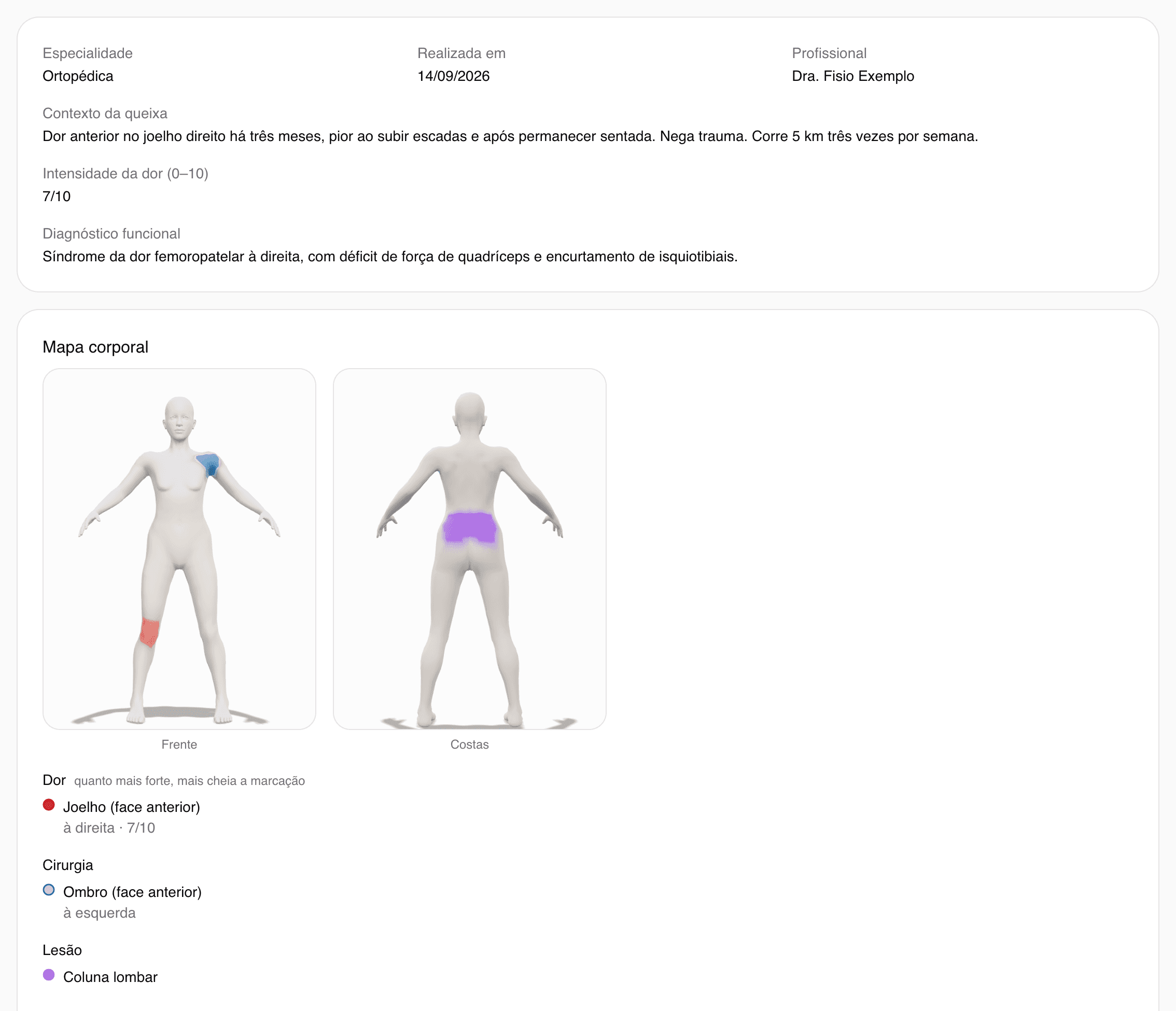
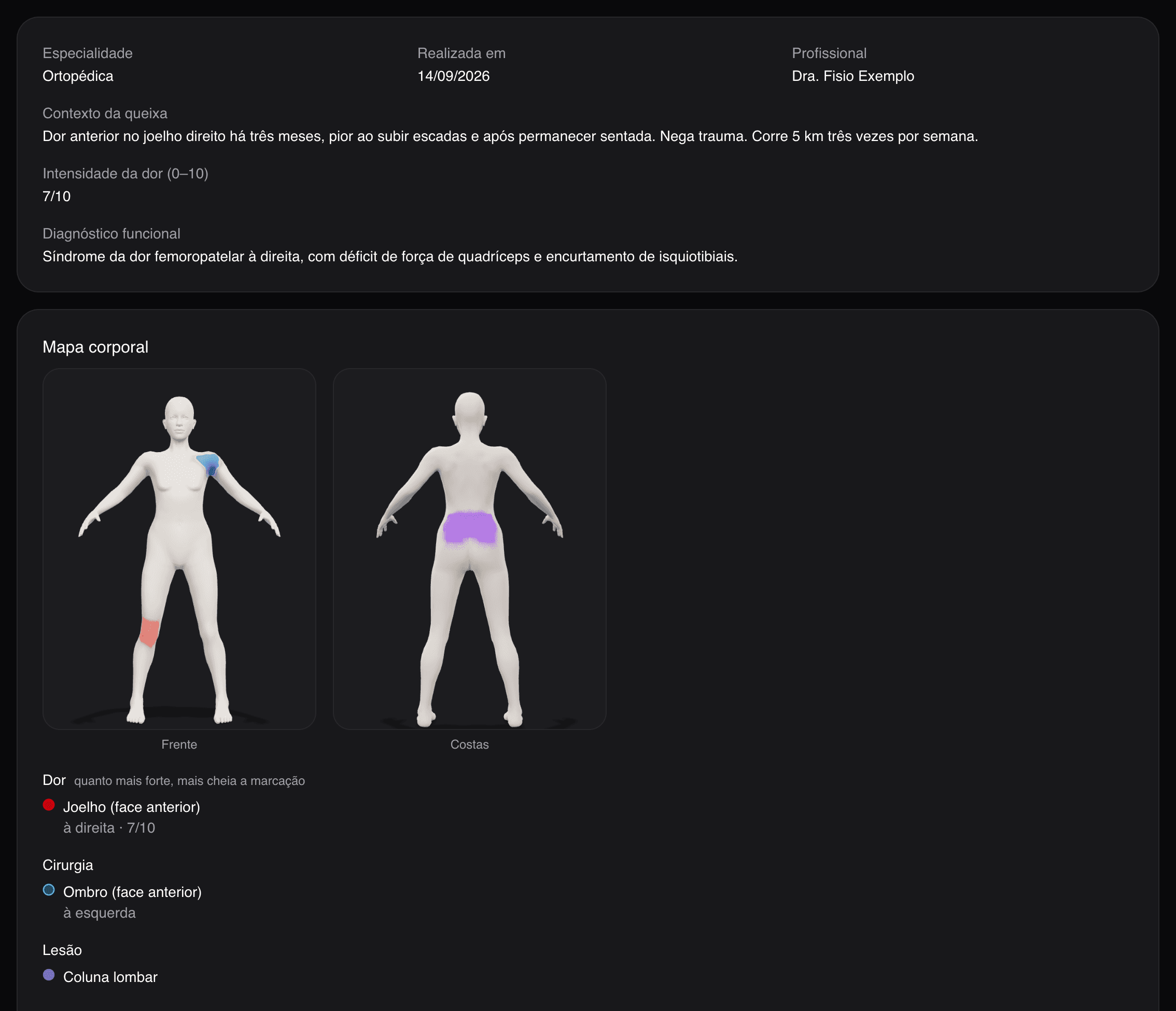
Body map
There are two ways to mark: the region the patient points at, or the structure the examination names. The marks go whole into the printed report, front and back. And if the device cannot draw the figure, the list of marks is still there — nothing in the record depends on the drawing.
With AI
AI writes the draft. You are the one who signs.
Record the intake interview and it becomes a suggested evaluation — with the body marks already proposed. Say which techniques you used and it writes the note for you. None of it reaches the record on its own: everything arrives as an editable draft, and only becomes real when the physiotherapist signs.
Dictated in session: patellar mobilisation, quadriceps strengthening.
Patient reports less pain climbing stairs. Joint mobilisation and quadriceps strengthening performed. Treatment plan maintained.
12 of 30 drafts this month
The audio goes away.
The recording is deleted as soon as it becomes text, and the transcript is never stored anywhere.
CPF, phone and email are stripped first.
If the patient says one out loud, it is removed before the text leaves here.
You can see how much you used.
Your plan says how many drafts and how many intakes it brings each month, and the billing screen shows how much of that you have used.
Privacy and records
Your patients' data, treated as a medical record.
What Brazilian law and the physiotherapy council ask of the system is already on — nothing for you to configure.
Your data stays in Brazil.
Database, files and application all run in São Paulo. The medical record and the anamnesis audio never leave Brazil; only the text the AI needs to read is processed in the United States.
You know who saw what.
Every record opened is logged, with the person and the time. The owner and the administrator can read that list whenever they want.
CPF, phone and email kept secret.
They are encrypted in our database. From outside, nobody can read them.
Each clinic sees only itself.
Someone who works at two clinics can keep both tabs open: what is saved in one never lands in the other.
The clinical history is never deleted.
Deleting a patient erases the personal details and keeps the clinical history — which is what the law requires you to keep.
The patient's signature stays locked away.
Stored separately, and only reachable through a link that lasts one minute.
A signed note does not change.
Once signed, the note stays as it is. A correction is an addendum, never a rewrite of what was already there.
Retention follows CFM 1.821/2007 and COFFITO 414/2012. Personal data handled under Brazil's LGPD.
How Brio was built
What you can check.
Three facts, which you can check before you decide.
Built with physiotherapists at the table
The scales, the structure names on the body map and the discharge reasons were decided with physiotherapists who see patients every day.
Records the way the council requires them
One note per attended session, as COFFITO requires. Records kept for the period the CFM sets. Personal data handled under the LGPD.
No card and no lock-in
You try it with your own clinic, no card needed, and leave whenever you want. There is no penalty and no minimum term.
Plans
You only pay for the people who treat patients.
Choose by the number of physiotherapists who see patients at your clinic. Need one more? Just add them.
Solo
- Includes 1 physiotherapist. Each extra one: $39/month.
- AI with no monthly cap, for a clinic's normal use.
Clinic
- Includes 3 physiotherapists. Each extra one: $35/month.
- AI with no monthly cap, for a clinic's normal use.
Clinic Pro
- Includes 7 physiotherapists. Each extra one: $29/month.
- AI with no monthly cap, for a clinic's normal use.
Network
For large operations: contract and price agreed together.
- AI with no monthly cap, for a clinic's normal use.
- Billed by invoice.
- Price agreed directly with us.
In every plan, at no extra cost
- Patients, cases, evaluations with the body map, treatment plan, sessions and clinical notes
- A trail of who opened each patient's record, and when
- CPF, phone and email kept encrypted
- The patient's signature on arrival, and an attendance certificate with the clinic's own brand
- Reception and management use the system; you pay only per physiotherapist
- As many addresses as the clinic needs, with nothing extra to pay for each one
7-day free trial, no card required.
No lock-in and no cancellation fee. You cancel whenever you want.
FAQ
Frequently asked questions.
Your clinic, with brio.
It is 7 days free, with no card: create your clinic and start today. If you would rather see Brio working first, talk to us.